

Es gibt so viele Stellen für ein Ohrpiercing, wie es Ohrformen gibt: Nach oben sind kaum Grenzen gesetzt. Wir haben die beliebtesten Varianten für Sie in Kategorien eingeteilt und zeigen außerdem, welche Piercings zu welchem Typ passen.
Sie möchten mehr über ein bestimmtes Piercing erfahren?
Egal, wo Sie sich piercen lassen: Achten Sie darauf, dass das Studio sauber wirkt und die Instrumente fachgerecht sterilisiert werden. Für Knorpelpiercings sollten Hohlnadeln verwendet werden (sie heilen auf diese Weise in der Regel deutlich schneller), für Ohrläppchen kann auch eine Piercingpistole zum Einsatz kommen.
Nehmen Sie sich die Zeit, die geplante Stelle noch einmal genau zu prüfen, bevor Sie grünes Licht geben – schließlich müssen Sie hinterher mit dem Loch leben!
Bedenken Sie: Ohrläppchenpiercings sind meist weniger schmerzhaft als Knorpelpiercings, weil sich in diesem Bereich weniger Nervenenden befinden.
Neugierig geworden? Im Schmuck-Glossar erfahren Sie mehr über verschiedene Ohrringstile
Ohrläppchen
Das häufigste Piercing überhaupt: Ein einzelnes Ohrläppchenpiercing ist ein Klassiker, der weltweit beliebt ist. Es wird meist mit einer Piercingpistole oder einer sterilen Piercingnadel gestochen. Es gehört zu den am wenigsten schmerzhaften Piercings und heilt in der Regel auch am schnellsten ab.
Heilungsdauer: etwa 6–8 Wochen
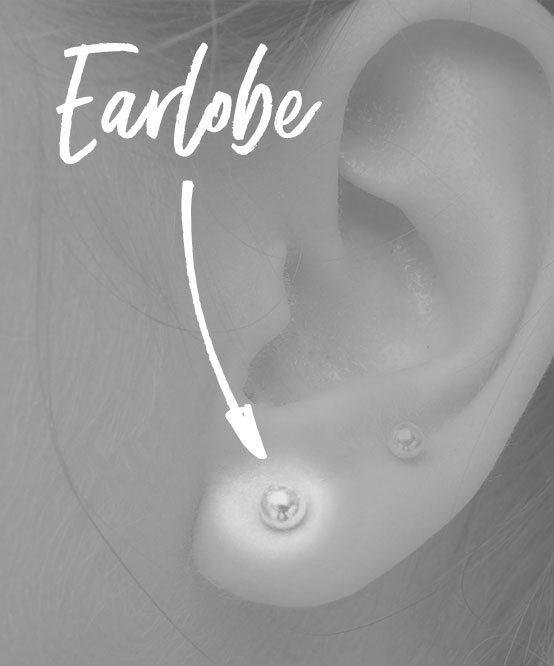
Mehrfach-Ohrläppchen
Natürlich können Sie sich die Ohrläppchen auch mehrfach pro Seite piercen lassen – oft werden die Löcher in einer Reihe entlang der Ohrform gesetzt.
Heilungsdauer: etwa 6–8 Wochen

Helix
Jedes Piercing am äußeren Rand des Ohrs.
Heilungsdauer: 2–12 Monate

Tragus
Piercing des kleinen Knorpelstücks, das vor dem Ohr hervorsteht. Eine vergleichsweise schmerzarme Stelle.
Heilungsdauer: 8–16 Wochen

Anti-Tragus
Piercing des Knorpels gegenüber dem Tragus, direkt oberhalb des Ohrläppchens.
Heilungsdauer: 8–16 Wochen

Orbital
Zwei Piercings, die sich durch ein einziges Schmuckstück, zum Beispiel einen Barbell, verbinden lassen. Sie sollten einzeln gestochen werden und vollständig abheilen, bevor sie miteinander verbunden werden.
Heilungsdauer: 2–12 Monate

Snug
Piercing des inneren Knorpels, etwa auf halber Höhe des äußeren Ohrrands.
Heilungsdauer: 8–16 Wochen

Daith
Piercing des Knorpels zwischen dem oberen Innenohr und dem Gehörgang.
Heilungsdauer: 8–16 Wochen

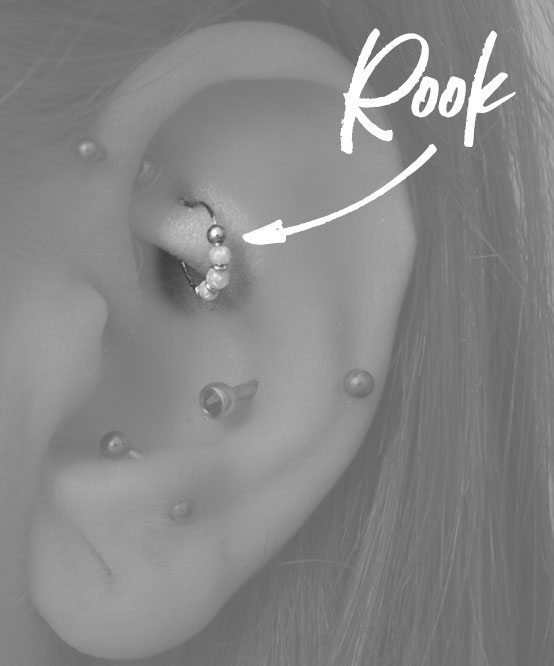
Rook
Piercing der dicken Knorpelfalte im oberen Innenohr. Dieses Piercing kann ziemlich schmerzhaft sein und bis zu einem Jahr zum Abheilen brauchen.
Heilungsdauer: 2–12 Monate
Conch-Piercings
Als Conch-Piercing bezeichnet man jedes Piercing in der zentralen „Muschel“ des Ohrs.
Heilungsdauer: 8–16 Wochen

Was sollte ein Ohrpiercing kosten?
- Ohrläppchenpiercings: etwa 20–30 £ für ein Paar
- Knorpelpiercings: 15–30 £ pro Piercing (die Preise der Studios schwanken stark)
Welche Piercings passen zu kleinen Ohren?
Ein schlichtes Paar Ohrläppchenpiercings passt zu jeder Ohrform. Wenn es mehr sein soll, richten Sie sich bei der Wahl nach der Faltung und Form Ihres Ohrs. Bei kleinen oder angewachsenen Ohrläppchen wirkt es schnell überladen. Entscheiden Sie sich dann für Piercings mit etwas Abstand zueinander, zum Beispiel einen Tragus, ein Ohrläppchen- und ein Helixpiercing.
Welche Piercings passen zu großen Ohren?
Ein schlichtes Paar Ohrläppchenpiercings sieht auch an größeren Ohren klassisch aus. Da Sie hier mehr Platz zum Experimentieren haben, könnten Sie eine Reihe aus drei Ohrläppchenpiercings oder mehrere Helixpiercings ausprobieren. Möchten Sie das Ohr optisch weniger betonen, verzichten Sie auf Helixpiercings (besonders bei abstehenden Ohren) und wählen Sie stattdessen zum Beispiel einen Tragus – für einen klaren, modernen Look.
Zeigen Sie, wer Sie sind
Mit Piercings lassen sich Persönlichkeit und individueller Stil wunderbar ausdrücken. Merken Sie sich Piercings, die Ihnen bei anderen gefallen, und sprechen Sie mit einem professionellen Piercer darüber, was zu Ihrer Ohranatomie passt. Sobald alles verheilt ist, können Sie nach Lust und Laune mit Ohrsteckern, Ohrringen, Ear Cuffs und Barbells experimentieren und Ihren ganz eigenen Look gestalten!
